From Our Resources
Six-Week Production Lead Times: What Startup Fashion Brands Can Learn
Part 1 of 2. Part 2: Clothing Brand Lead Times: 7 Steps to Faster Repeat Orders
I was browsing fashion news tonight when I came across a piece every startup fashion brand should read with care. In late September 2026, H&M's chief executive Daniel Ervér told Reuters that the retailer can take some products from "a first rough idea to the customer in six weeks". His aim is to buy more of the range that way.
My first thought was: impressive. It was very quickly replaced by a second one. This is not a benchmark. It isn't inspiring either. In fact, it can be damaging, because it puts startup brands under pressure to perform and outperform.
If your first collection has been in development for four months, that headline can sting. You start to wonder whether your manufacturer is too slow, whether you're too indecisive, or whether everyone else knows a shortcut you don't.
In almost every case, it's none of those. You're comparing two completely different machines.
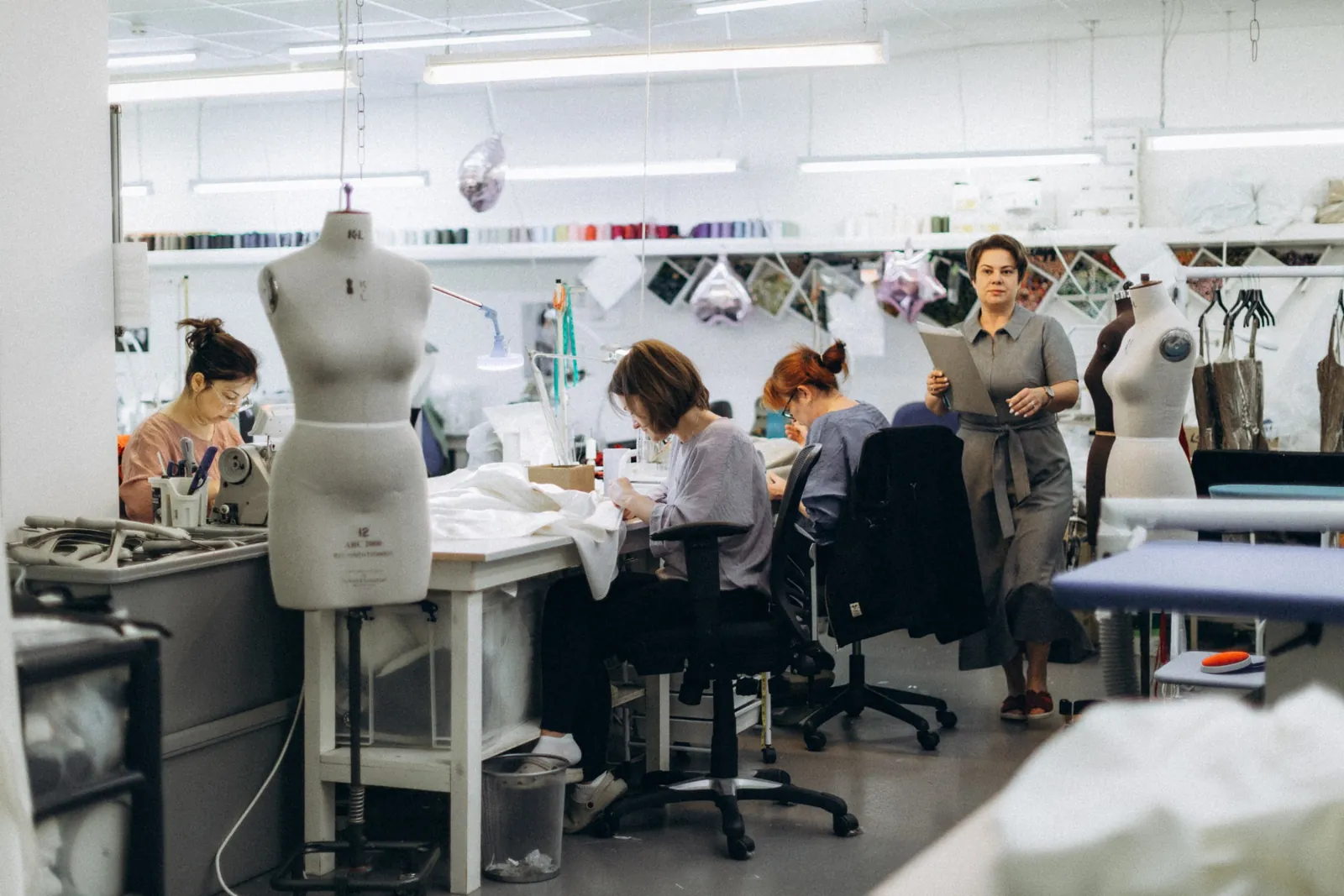
Why H&M's Six Weeks Makes Startup Fashion Brands Feel Slow
Six weeks is a striking number. It's also the output of a system that took decades and thousands of people to build.
A retailer of that size has designers, buyers, garment technologists, merchandisers, sourcing teams and logistics teams, all working at the same time. While one team approves a fit, another is already booking fabric, and a third is planning where the stock will go. Very little waits for anything else.
Here's how the two set-ups compare.
| H&M | A startup fashion brand | |
|---|---|---|
| Who makes decisions | Specialist teams working in parallel | Usually one founder, one decision at a time |
| Starting point | Proven blocks, approved factories, fabric programmes | Often a new block, a new pattern, a new fabric |
| Sales data | Years of history across around 4,000 stores | Instinct, early orders, perhaps some pre-sales |
| Manufacturer relationship | Long-standing, with agreed standards | New, and both sides are still learning |
One Founder, Twelve Jobs: Why Your Timeline Runs in Sequence
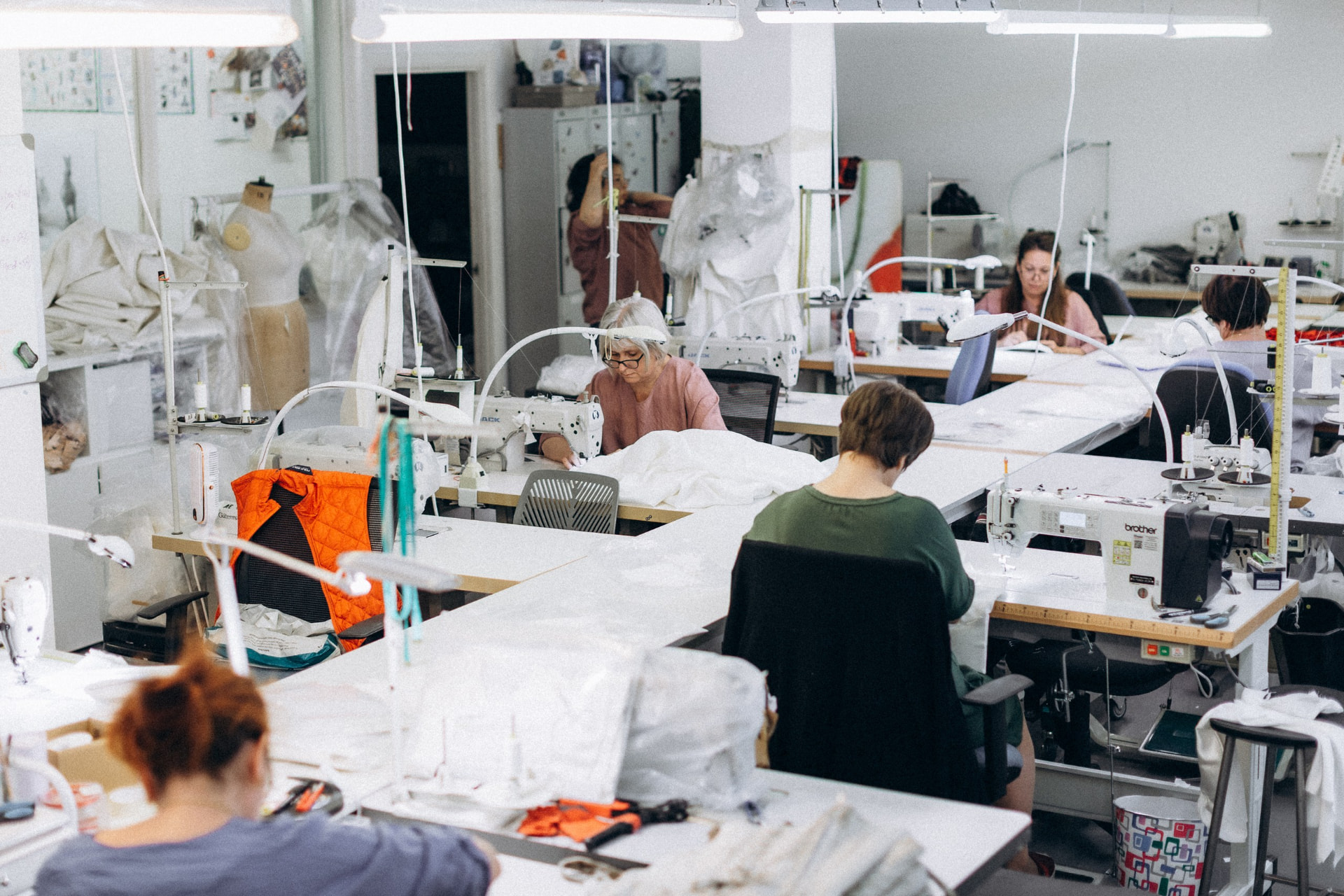
In your brand, the same person often designs the collection, sources fabric and trims, briefs the pattern cutter, approves the toile, signs off the sample, writes the tech pack, costs the range, builds the website and plans the launch. That person is usually you.
So things happen one after another. The fitting can't move until you've chosen the fabric. The fabric order waits until you've approved the costing. And while the sample is being made, you're answering emails about the photoshoot.
This isn't a sign you're disorganised. It's what a business with one decision-maker looks like, and most of the brands we've worked with over the past twenty years started exactly here.
Short lead times are usually the result of infrastructure, not of working faster.
H&M Isn't Starting From Scratch. Your First Collection Is.
That doesn't mean every H&M style is a repeat. It means each new product lands on top of proven blocks, approved factories, known fabrics and technical standards refined over thousands of styles.
Your first dress may be built from nothing. The block might need developing, and the first pattern might need two or three rounds of correction. You may still be working out how you want your brand to fit. Meanwhile your manufacturer is learning how you communicate and what quality level you expect.
That's two jobs at once. You're building the infrastructure and launching a collection on top of it, and that takes longer.
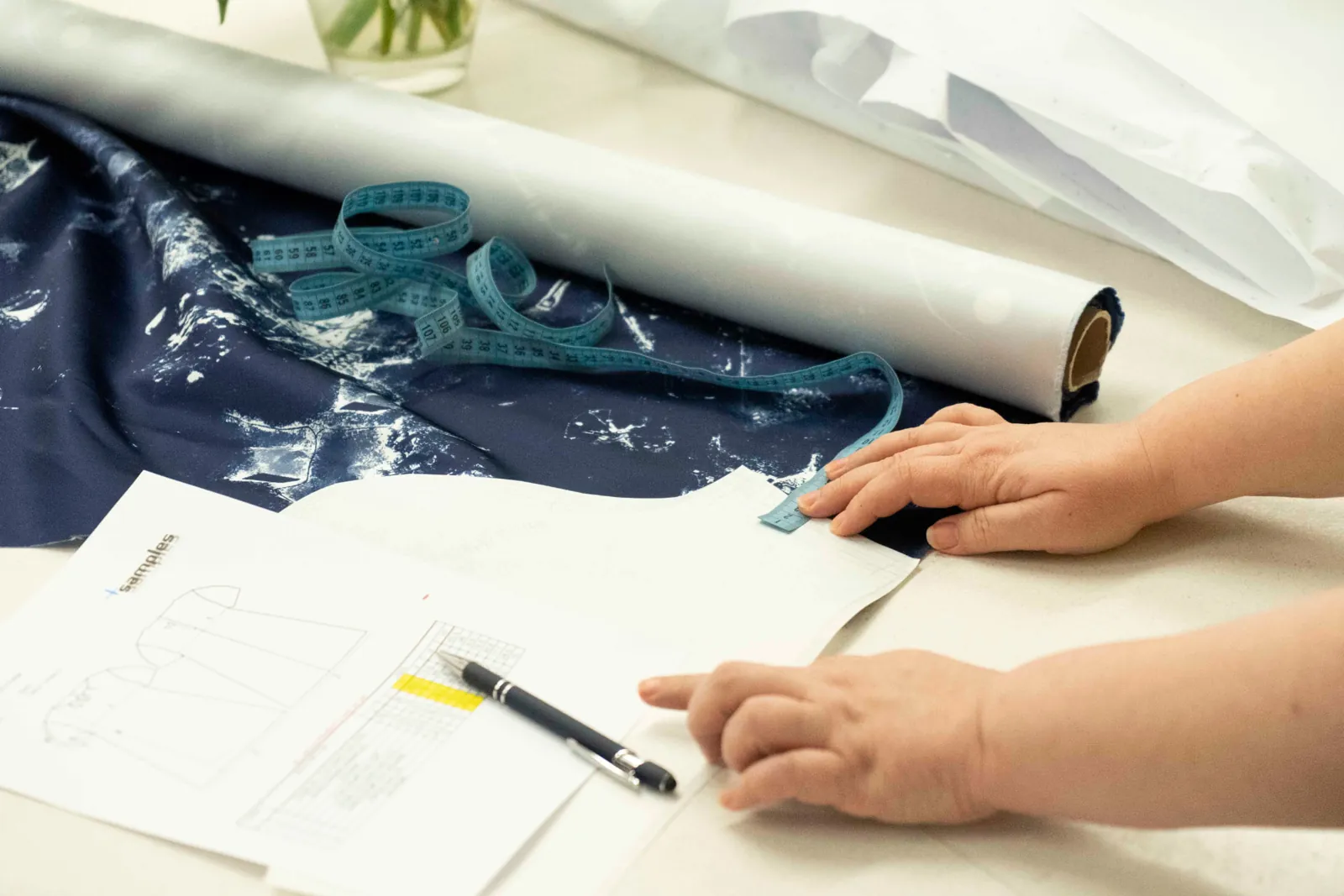
How Long Does It Take to Launch a Clothing Brand's First Collection?
For a startup fashion brand, six months from first pattern to production is about average. The real answer depends on a handful of variables:
- who your pattern cutter is
- where and how you source your fabric and trims
- whether you have support from a fashion consultant
- how many pieces are in your collection
A simple top developed from an existing block, in a fabric that's already in stock, can move quickly. A boned bodice, a corset or an evening gown in fluid silk needs more fittings, more testing and more time. It also helps to know that most studios, ours included, book collections one to two months ahead, and that's before the first stitch.
Where do the months go? For most first collections, the time splits across five stages:
- Pattern cutting and the first toile
- Two or three rounds of fittings and corrections
- The first sample in the real fabric
- The pre-production sample, which confirms exactly what the factory will make
- Booking and running production
Each stage waits on a decision from you. That's where the weeks add up, and it's rarely the sewing itself.
So the better question isn't "how fast should this be?" It's "what still needs resolving before this piece is ready for production?"
That covers fit, construction, fabric behaviour, trims, grading, cost and the quality standard you'll hold the factory to. Squeezing those decisions into an arbitrary deadline doesn't make them disappear. It pushes the risk further down the line, where it costs more to fix.
If you're not sure what a realistic timeline looks like for your collection, that's exactly what a Clarity Call is for. We'll look at where each piece stands and map out what still needs doing.
What Rushing Your Collection Actually Costs
Every so often the same pattern repeats itself. Different designer, same issue: a fitting gets skipped because there's no time for another toile. A fabric gets approved because it's in stock, not because it's right. The pattern is graded before the base size fits properly, so the fault is copied into every size. Samples fly back and forth by express courier, and the factory is asked to rush.
One of the most heartbreaking stories involved a London College of Fashion graduate. He was extremely talented. We had helped him develop his final collection at university, and he came back to us with his first collection as a brand.
It was funded by his family, with a very tight launch deadline attached. He had agreed to that deadline, and he also had something to prove to his family. That pressure didn't make things easy for him, and a number of wrong decisions followed.
The fabric he wanted, the one we had swatches of during pattern development and toiling, wasn't in stock for sampling and production. He took a substitute instead: a different fabric, lower in quality and stiffer. Several of his garments relied on drape, and in the stiffer fabric they simply didn't fall correctly. Rather than sampling one style first to see how the fabric behaved, he went ahead with the entire range of 12 garments.
Needless to say, it didn't look right. He won the race against time, but the collection wasn't what it should have been.
Speed is not the same as efficiency. An efficient process removes unnecessary delays. A rushed process removes necessary development. On a calendar they look identical, but in your stockroom they look very different, and most founders only learn that the hard way.
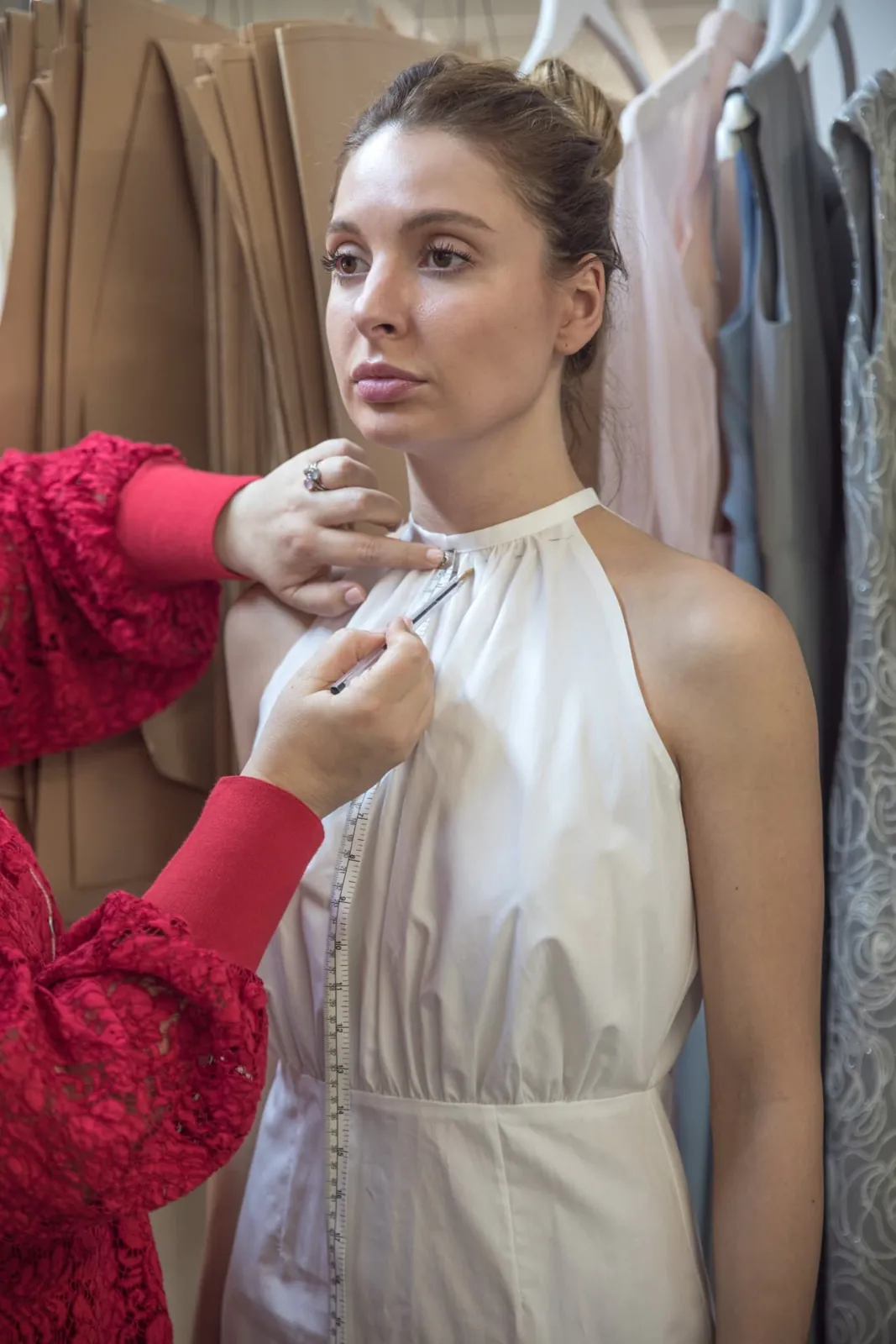
What Startup Fashion Brands Can Learn From H&M
Don't copy H&M's six weeks. Copy the principle behind it.
H&M isn't chasing speed for its own sake. According to the same Reuters report, the retailer is shortening lead times and buying from factories closer to its main markets because trends move fast and demand is harder to predict. The real goal is to respond once it can see what customers are buying.
That principle scales down well. Your first order includes two processes: development and manufacturing. A repeat order, if the first one was done properly, is mostly manufacturing. That's why your first collection can take months while a repeat of your bestseller takes a fraction of the time.
The speed worth chasing lives in your second order, not your first. In Part 2, we walk through seven steps to faster repeat orders, from approved blocks to continuity fabrics.
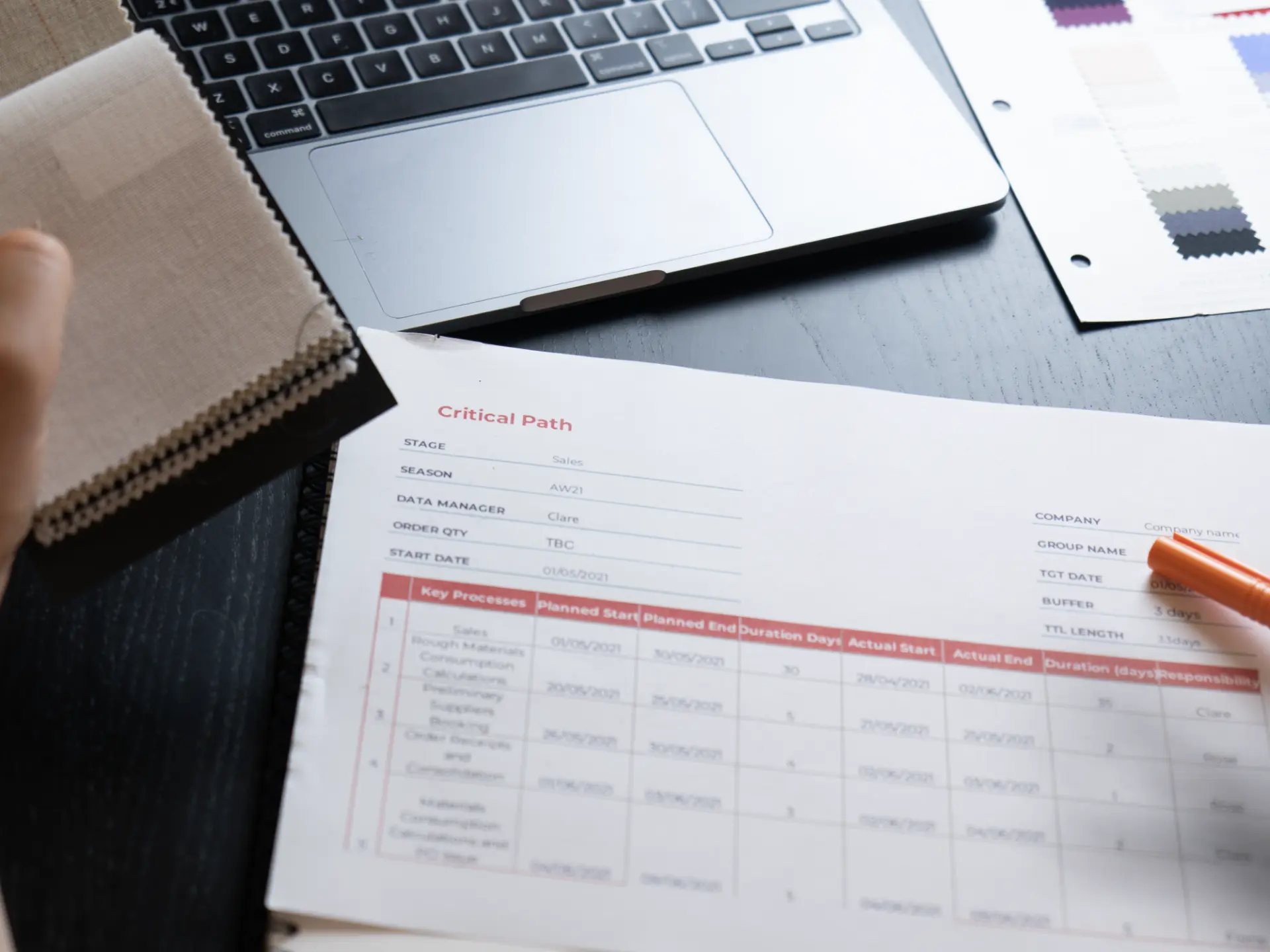
Your First Collection Isn't Slow. It's Being Built.
If your collection is taking months, don't assume something has gone wrong. Ask two questions instead. Are we using this time to resolve each piece properly? And are we building something that will make the next order faster?
If the answer to both is yes, you're doing the part H&M did decades ago. You're just doing it now.
Not sure your timeline is realistic?
Book a 60-minute Clarity Call. We'll go through where your collection stands, what still needs resolving, and a realistic route to production. The call is recorded on Zoom and you get the recording afterwards.
Just starting to explore? Book a complimentary Discovery Call
Share This Article
Further Reading
Join Our Newsletter
Subscribe and Get 30 Minutes Instead of 15
Sign up for occasional studio updates and resources content. As a thank you, your first Discovery Call is extended to 30 minutes instead of the standard 15.
No spam. Unsubscribe anytime.