From Our Resources
CMT or Fully Factored? How to Choose the Right Production Route for Your Brand
Get this decision wrong at the start and it costs more than money. It costs months.
Why This Decision Trips Up New Brands
Most new brands choose based on price per unit alone. That's understandable, price is usually the first number anyone gives you. But price per unit tells you almost nothing about what you're actually signing up for.
Fully factored production and CMT ask completely different things of you before a single garment gets cut. One expects you to hand over a sketch and a size chart and trust the factory with the rest. The other expects you to arrive with a graded pattern, sourced fabric, and enough production knowledge to troubleshoot a fitting problem over the phone. Choose the wrong one for where your brand actually is, and you'll spend your first season fighting the process instead of building the collection.
What Fully Factored Production Actually Means
Fully factored, sometimes called fully packaged, means you're buying finished garments. The factory sources the fabric and trims, cuts and grades the pattern, and manufactures the goods. What you supply is the sketch, the tech pack, your sample sizing, your branding, and your grading rules for them to follow.
This route usually suits larger quantities and works out cheaper per unit, particularly when manufacturing further afield in India, China, or parts of the EU. That lower price comes with strings attached, though. Raw material minimums are set by the factory's own supply chain, not yours, and they're often steep: 1,000 metres per colour isn't unusual, sometimes 3,000 metres across a small range. If you're not certain a fabric will sell through, that's a serious commitment before you've shipped a single unit.
Lead times stack too. Six to eight weeks for the fabric, four weeks to manufacture, then shipping on top. Ten to fourteen weeks isn't an unusual wait before goods land, and that's before anything goes wrong.
Sample charges are worth asking about early. Factories commonly charge double or triple the agreed unit price for a first sample, and some just set a flat fee. We've heard two hundred pounds quoted as a standard rate on more than one occasion.
What CMT (Cut Make Trim) Actually Means
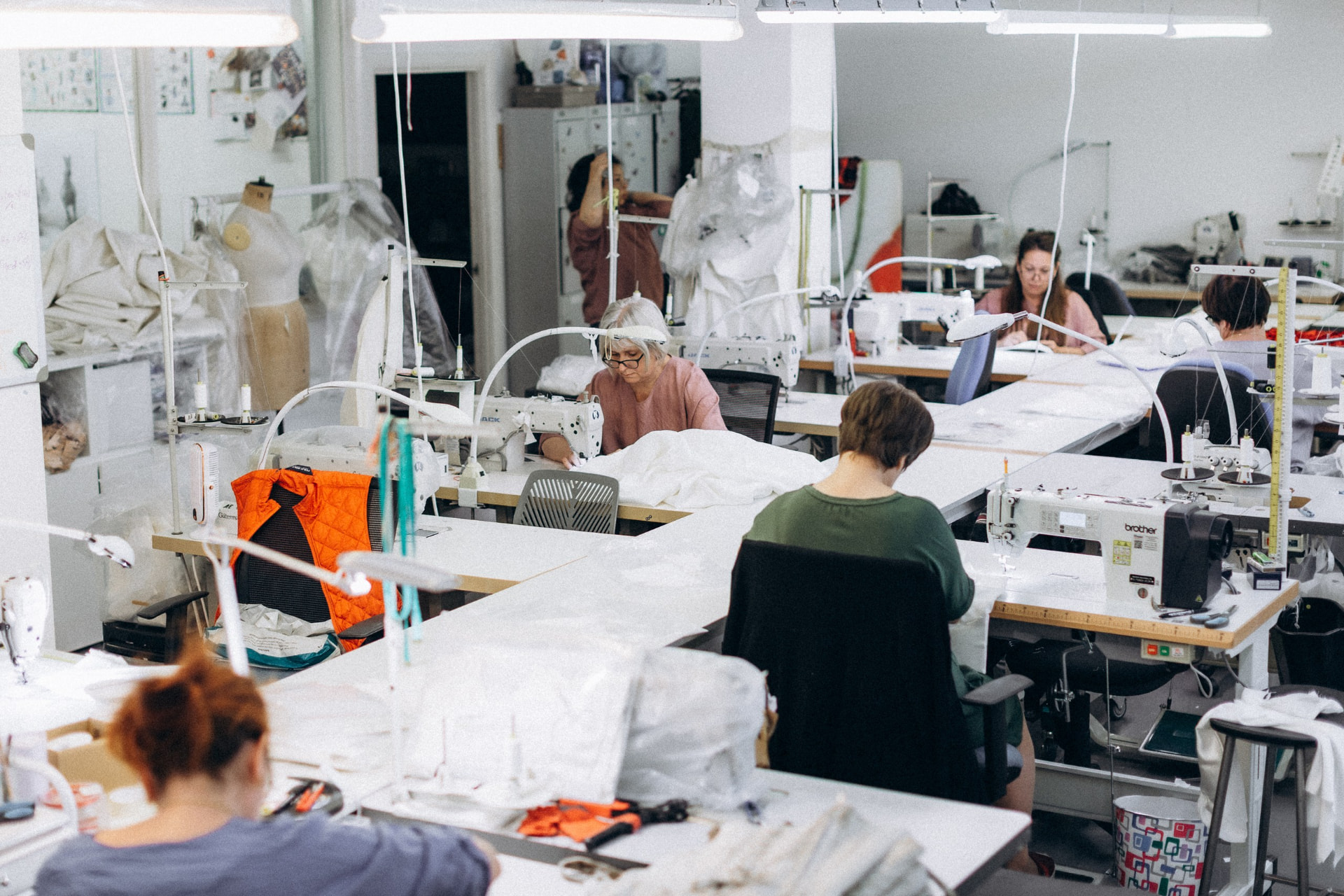
CMT flips the responsibility. The factory supplies labour, cutting and sewing to your instructions. You supply the graded pattern, the fabric, the linings, and usually the trims. Thread supply varies by factory. Some include it in the labour cost, some don't, and you won't know until you ask.
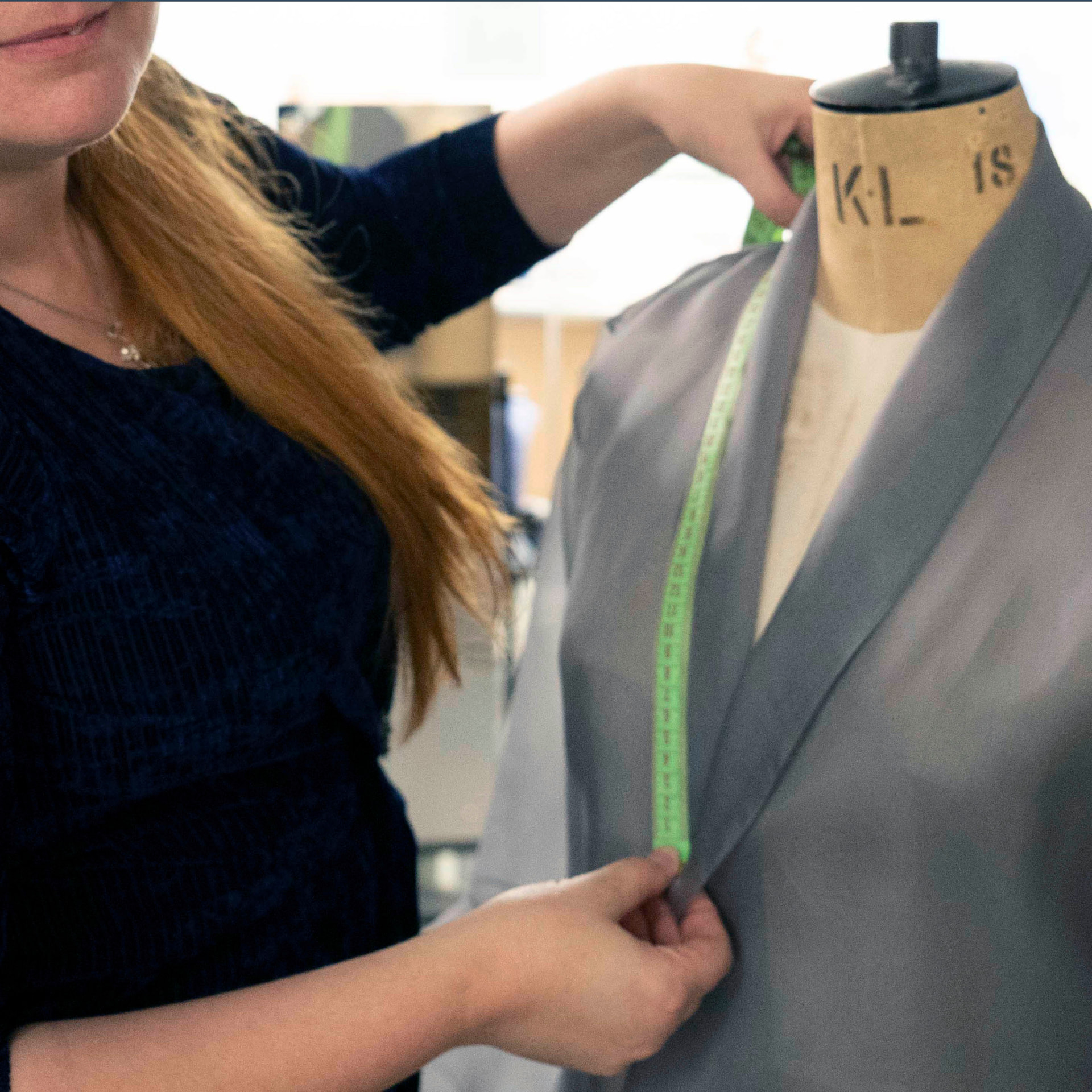
Here's the bit most people miss: an estimated seventy percent of CMT units don't run pattern development in house. If your factory is one of them, you'll need a freelance pattern cutter or a development studio to get you to sample stage before the factory ever sees your garment. That's an extra relationship to manage, and an extra cost to budget for.
CMT tends to suit smaller runs and gives you far more control over quality and process throughout. It's more commonly UK and EU based, though not always. Some of the largest CMT operations we've come across run out of Lithuania and Latvia, with hundreds of machinists on the floor. Smaller isn't a rule. It's just the more common pattern.
Quick Comparison
Swipe to compare →
| CMT (Cut Make Trim) | Fully Factored | |
|---|---|---|
| You supply | Graded pattern, fabric, trims (thread varies) | Tech pack, sketch, sample sizing |
| They supply | Labour only | Fabric, trims, pattern, grading, samples |
| Typical MOQ | Lower, often workable for small runs | Higher, often 1,000m+ per colour |
| Typical location | UK and EU more common | Often Far East, India, or EU |
| Your control level | High, you manage quality throughout | Lower, you rely on their internal standards |
| Best suited to | Brands wanting control at smaller volume | Brands ready to commit to volume |
What Both Routes Ask of You, Regardless
Whichever route you choose, some groundwork doesn't change. You'll need a tech pack thorough enough to remove all ambiguity. If you want a French seam and don't say so, a machinist somewhere will make that decision for you, and you won't find out until the sample arrives.
You'll go through more than one sample stage, and the distinction matters more than most people realise. A first sample is usually made from sample-length fabric, close enough for fit and construction, but not the real thing. A pre-production sample has to be made from the actual bulk fabric, because bulk cloth can behave completely differently once it's cut and sewn at scale. Skip that step and you find out about the problem after you've committed to production, not before.
You'll also need to agree payment terms and delivery terms before goods move, not after. Whether the factory works to ex-works or delivered terms changes who's responsible for shipping and when ownership actually transfers. The International Chamber of Commerce's Incoterms rules are the standard reference here, and it's worth knowing which term you're agreeing to, especially the further your supplier is from home.
And regardless of who cuts your fabric, supply your own labels and swing tickets. Almost every growing brand ends up working across more than one factory eventually, even if it doesn't feel that way with your first collection. If each factory sources its own branding, the quality and colour will drift between them. Supply it yourself and your brand stays consistent no matter who's making it.
Do not assume anything. Ask. Every factory, CMT or fully factored, works slightly differently, and the ones we've dealt with rarely volunteer that detail upfront.
This is exactly the kind of decision we help new brands work through before they commit to anything. We've built a checklist from the questions that actually decide it, the ones that matter more than price per unit. Download it here.
Where We've Seen This Go Wrong
We've seen this pattern more than once. A new eveningwear brand chooses fully factored for their debut collection because the unit price looks better on paper. The factory quotes a 3,000 metre minimum across three colourways. The brand hasn't sold a single unit yet and is now committed to fabric it can't return.
A CMT setup with a 200 to 300 metre requirement would have let that same brand test the collection at a fraction of the financial risk, at a slightly higher unit cost, with the flexibility to scale into fully factored once the range had actually proven itself. Not always the right call. But for a first collection with no sales history, it usually is.
The Real Cost of Choosing Blind
Get this decision wrong and the cost isn't abstract. It's thousands of pounds committed to fabric before your first sale. Which is exactly the kind of gap that catches brands out on the cash flow side too. It's sample charges stacking up because nobody asked about surcharges upfront. It's a fourteen-week wait turning into eighteen when a supplier problem hits and you find out, too late, that your factory works ex-works, not delivered. None of this is unusual. It's simply what happens when the decision gets made on unit price alone.
Work Through It Properly
CMT and fully factored aren't better or worse than each other. They suit different brands at different stages, and the right answer depends on your volume, your budget, and how much control you want over the process.
We've put together a checklist covering the exact questions from this article: MOQs, sample charges, control, lead time, so you can score your own situation and see which route actually fits.
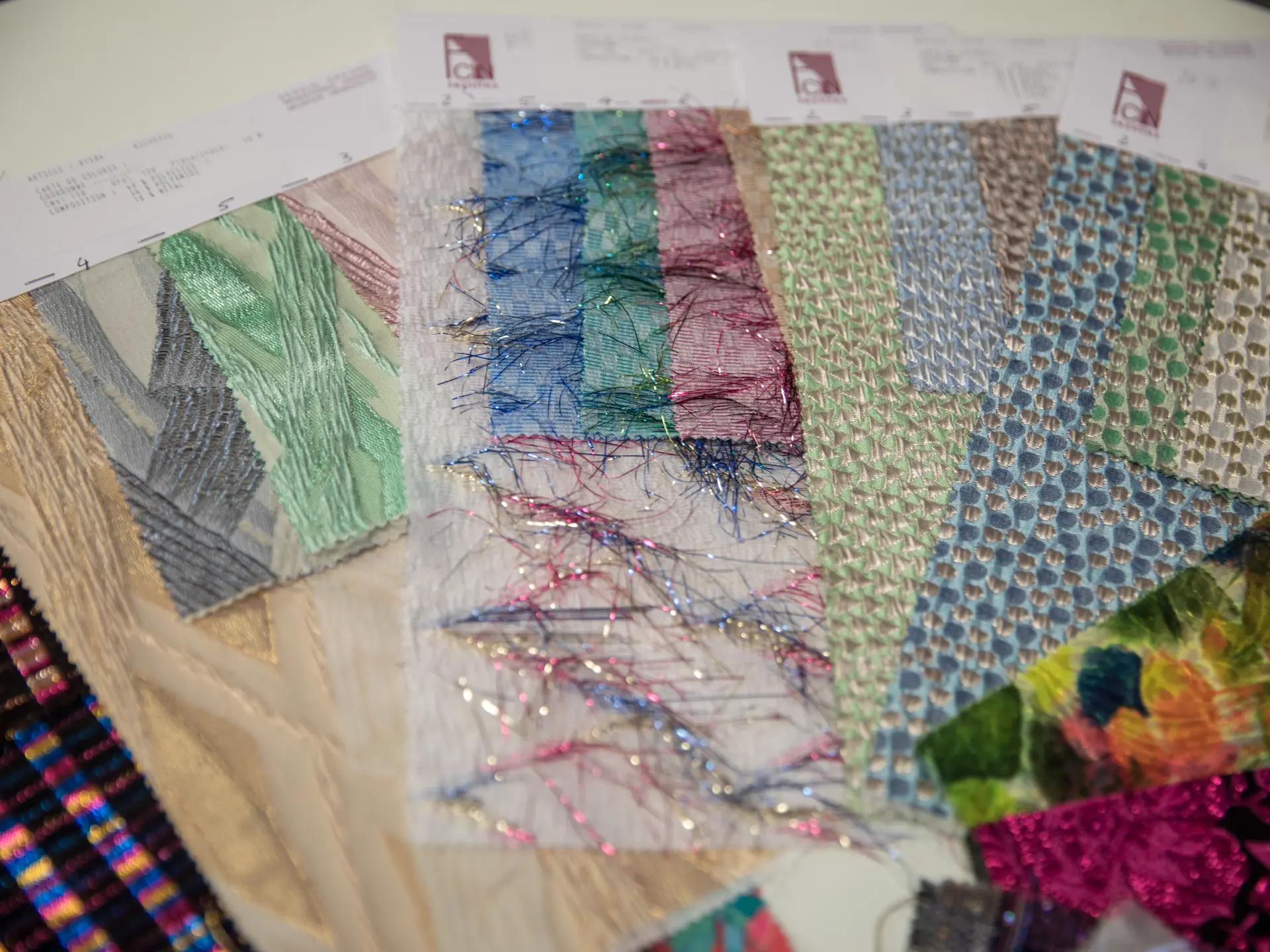
If you've decided to go with the CMT option and need help with fabric sourcing, this blog post can help you get going.
Founder, CMT Studio
Published 3 September 2026
Further Reading



Join Our Newsletter
Subscribe and Get 30 Minutes Instead of 15
Sign up for occasional studio updates and resources content. As a thank you, your first Discovery Call is extended to 30 minutes instead of the standard 15.
No spam. Unsubscribe anytime.